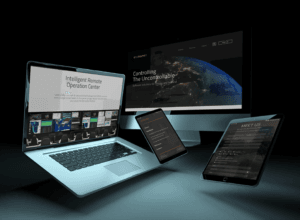
Case Study: Intellisync – Pioneering Digital Resilience
Introduction
Welcome to the presentation of Intellisync, a leading company in the fields of cybersecurity, digital transformation, and artificial intelligence. Our mission is to provide cutting-edge solutions that protect, transform, and innovate businesses. In this case study, I explore the design journey behind a platform built to handle the complexities of the modern digital landscape.
Project Overview
Intellisync is dedicated to leading companies into the future with innovative solutions. We offer services that protect data, enhance business processes, and implement advanced technologies for a competitive edge.
The challenge was to create a visual and functional ecosystem that could hold these three pillars together—Cybersecurity, Digital Transformation, and AI—under a single, cohesive user experience.
The Design Strategy: “Future-Proof Logic”
As a Senior Designer, my goal was to translate Intellisync’s mission into a high-fidelity interface that communicates both security and innovation.
Visual Identity: We adopted a “Deep Space” aesthetic, utilizing a dark-themed UI. This isn’t just a stylistic choice; in the world of cybersecurity and AI, dark interfaces reduce cognitive load and allow critical data alerts to stand out with high contrast.
The Privacy Factor: Note: To respect client confidentiality and protect proprietary logic, the visual representations and data visualizations shown in this Behance preview have been slightly modified. The core UX architecture, however, remains faithful to the original project.
Core Pillars of the Interface
1. Unyielding Cybersecurity Security is the heart of Intellisync. The design focuses on “Defense by Design,” featuring real-time monitoring dashboards that utilize neural patterns to identify threats before they escalate.
2. Seamless Digital Transformation Transformation is about movement. We streamlined complex business workflows into intuitive navigation paths, ensuring that moving from legacy systems to advanced digital tools feels natural and friction-less for the end-user.
3. Human-Centric AI AI can often feel like a “black box.” My design approach was to make the AI’s actions transparent and actionable, providing users with a competitive edge through clear, predictive data visualizations.
The Result
The final design for Intellisync successfully balances technical depth with accessibility. By prioritizing clarity and a modern aesthetic, the platform empowers companies to embrace the future with confidence, knowing their data is protected while their processes are being innovated.
View the UI details on Behance