The Designer as a Conductor: My Creative Symbiosis with Artificial Intelligence
Written By
Edoardo Francesco Liotta
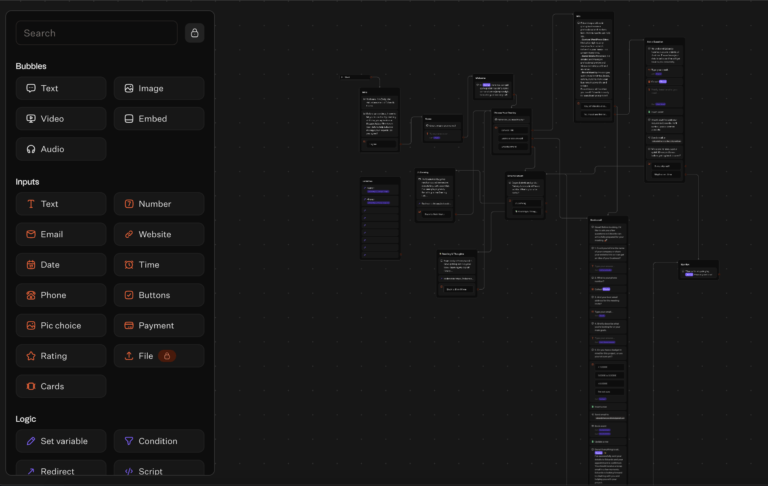
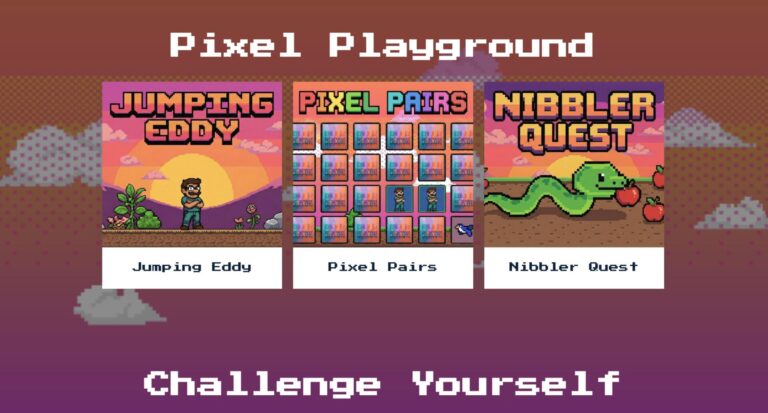
In today’s digital landscape, the line between imagination and execution is thinning drastically, opening doors that until recently seemed locked by constraints of time and budget. Recently, driven by my lifelong passion for gaming, I decided to take on a stimulating challenge: developing a series of web-based video games from scratch. My goal was to use Artificial Intelligence not as a cold substitute for human labor, but as a powerful accelerator for my own creative process.
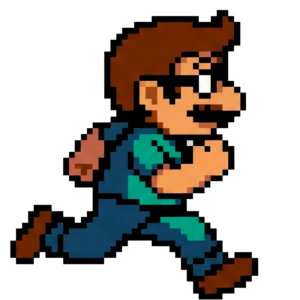
It all began almost as a game itself, with a brainstorming session alongside ChatGPT to outline mechanics and settings. Once the conceptual vision was established, I moved into the visual realm, where the collaboration between man and machine became even tighter. I used Nano Banana Pro to generate the basic visual concepts, but this is where the first true professional integration occurred: the AI proposes the idea, but the designer must curate the technical consistency and final quality. During the creation of assets for the character Eddy, for instance, the algorithm showed clear limits in handling the dynamic anatomy of running, confusing the alternation of legs and arms. It took my manual intervention with Photoshop and Illustrator to reconstruct the “second phase” of the animation, ensuring the fluid movement that the AI, on its own, could not correctly close.
This need for supervision emerged even more strongly during the code development phase. For the game logic in HTML, CSS, and JavaScript, I relied on the power of Gemini, yet the reality of development requires a constant clinical eye to avoid technical “hallucinations.” A prime example occurred while balancing the physics in Jumping Ed: the AI had set the parameters for the jump and the oscillatory movement of obstacles in a completely incoherent way, making the gaming experience either physically impossible or far too trivial. Leveraging my technical expertise, I had to intervene directly on the numerical values and physics variables to “fine-tune” the mechanics, calibrating the gameplay to ensure it was both challenging and rewarding. This clearly demonstrates that, without a solid understanding of programming languages, the code produced by AI would remain an empty and unusable shell.

Many today wonder if AI can provide “turnkey” products, but the reality I experienced in these experiments tells a different story: the added value lies in orchestration. It takes a professional who knows how to validate code, refine graphic assets, and assemble every piece into a coherent user experience on platforms like WordPress and Elementor. The future of design is exciting precisely because it allows us to tackle projects once thought unthinkable, provided we evolve constantly. Keeping up with the times is the only way to avoid becoming a “dinosaur” of the industry; AI will not replace the designer, but the designer who masters AI will become an irreplaceable professional, capable of transforming an algorithmic intuition into a product of excellence.
If you found this article insightful or have your own experiences to share, let’s continue the conversation!
👉 Join the discussion on LinkedIn or feel free to try the games by clicking the buttons below.